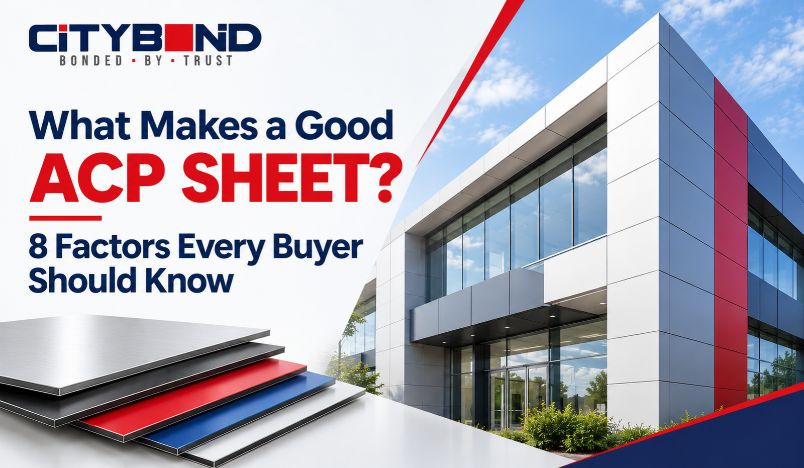
A quality ACP sheet maintains its flatness, color and strength even after a long time of installation. Aluminum composite panels are commonly used for facades, signage, interior cladding and partitions but the product’s quality can greatly differ. It is beneficial to know what things need checking before purchasing to help you avoid peeling coatings or distorted surfaces and costly replacements. These eight factors will help you judge any panel with confidence.
1. Aluminium Skin Thickness
The layers of aluminium on both sides safeguard the core and provide strength to the sheet. Thinner skins get dented easily and bend under wind force. For using outside, ensure that skins are at least 0.30 mm thick, whereas for inside use they can be a bit less in thickness. Always request the supplier to provide you with precise information about the thickness of the skin, not only about overall panel thickness.
2. Core Material Quality
The core part determines how the panel reacts to heat, moisture and fire. A virgin polyethylene core bonds more strongly, is lighter in weight and resists cracking better. Cores that are recycled or loaded with fillers may appear exactly the same on the initial day but they generally start separating early. Inquire if the core is made from new material and ask for test details if you’re not sure about the claim.
3. Coating Type and Finish
The duration of color depends on the surface coating. PVDF coatings are a good choice for outside use because they resist fading, chalking and damage from UV light. Polyester coatings perform nicely when used indoors or for signs. Make sure the finish is smooth, even and without any patches. This is because a rough coating often shows that there was poor quality control during its production.
4. Adhesion and Peel Strength
Skin and core bonding strongly together prevents the sheet from bubbling or splitting as time goes by. Good ACP sheets display significant peel strength, something that manufacturers determine through regular tests. You should request to view these test outcomes. When you are looking at a sample, gently bend a small piece that has been cut off. If it flexes cleanly without any layers coming apart, this is a good indication of proper lamination.
5. Fire Performance
Fire safety is very important, especially in tall buildings and business premises. The use of fireproof ACP sheets which have mineral-filled cores can help to slow down the spread of flames and lessen smoke. It’s necessary to ensure if these panels meet accepted India fire test standards, also select the grade that matches your project’s safety requirements. Never compromise on this point just to save a little on cost.
6. Weather and Corrosion Resistance
Facade panels face rain, heat, dust and coastal air every single day. A good sheet should handle temperature swings without warping and resist corrosion along the cut edges. Look for products backed by weathering tests and a written warranty on coating performance. Panels that are for outside walls must not be exchanged with those meant for inside.
7. Flatness and Dimensional Accuracy
Even a little change in thickness or size can cause noticeable wavy lines on big surfaces. Put the sheet on an even ground and look for bending, irregular edges or surface waves. Having uniform dimensions makes construction simpler, lessens waste and provides installers with neat joints that enhance the overall appearance of the whole task finished.
8. Warranty and Supplier Support
A good manufacturer supports their product with clear warranty rules. Make sure to read what the warranty includes, such as coating, colour fading and delamination, plus how many years it is valid for. For instance, Citybond provides ACP sheets used in different ways; however no matter which supplier you pick, make certain that paperwork, batch tests and after sales support are offered.
Final Thoughts
Picking the correct ACP sheet is not just about considering cost and color. You must evaluate aspects like skin thickness, core purity, coating quality, bonding strength, fire rating capability, weather resistance performance, flatness condition and warranty promise before making a decision. Some time spent on detailed examination, as well as asking straightforward questions to your supplier can prevent future repair needs or replacements while avoiding safety hazards later on. This will help in maintaining an excellent appearance for your building over many years.
Related Blog
ACP Sheet Thickness Guide: 3mm vs 4mm vs 6mm ACP
Fire Retardant ACP vs Normal ACP: Complete Buyer’s Guide
Fire Retardant ACP Sheets: Are They Really Worth It? Full Guide Inside
