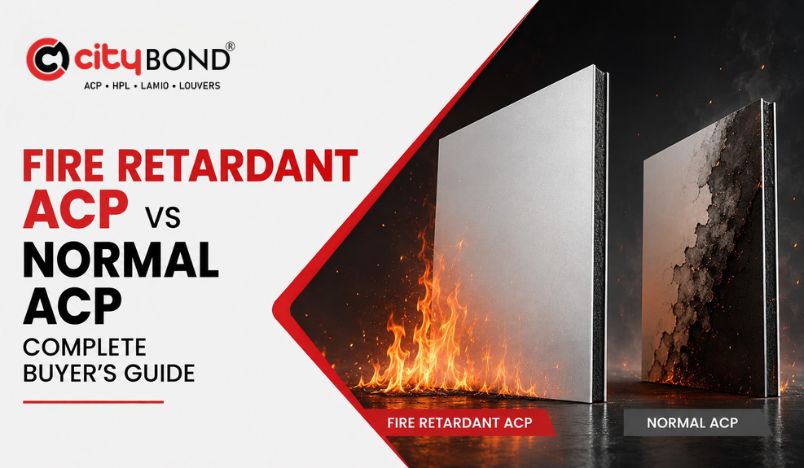
In modern constructions, the Aluminium Composite Panels are some of the most widely used cladding materials. Regardless of whether you are designing a commercial facade, a retail fit out or interior wall use, the appearance and safety of your structure will be directly related to the type of ACP used. It’s not just a technical detail, knowing the distinction between fire retardant ACP and normal ACP. It can impact lives and long-term building performance – it’s a decision to make.
What Is Normal ACP?
Normal ACP consists of two thin aluminium sheets placed on a polyethylene core. The lightweight construction and easy fabrication and cost effectiveness made this standard core so popular in the construction industry in the early days of ACP use. But polyethylene is very flammable. It will combust quickly and emit toxic fumes when exposed to fire, increasing fire risk in buildings that use this panel.
What is Fire Retardant ACP?
Fire retardant ACP is similar to normal ACP except that the material in the core is a mineral filled or specially treated compound that is resistant to ignition. Flame retardation and smoke emission reduction are the basic functions of the core which are specified in the event of fire. These panels have been designed to comply with national and international fire standards and are the recommended solution for architectures that are subject to strict fire codes such as high-rise buildings, public buildings, airports, hospitals and any strict fire code building.
Key Differences Between the Two
The main distinction is in the main substance and reaction to fire. Normally inbuilt ACP with a polyethylene core can burn very swiftly and spread flames along a facade at a high rate. Fire retardant ACP can do a lot to prevent this spread. Weight wise, fire-retardant panels are slightly heavier, since they have a denser mineral core. But the slight weight gain is far compensated for by the huge increase in safety performance and building code compliance.
Performance and Durability
Both types of panels are highly resistant to weather, UV exposure and overall use. They’re simple to clean up and keep up for an extended period of time. However, fire retardant ACP has more overall structural stability under extreme conditions. For builders and architects tackling long term projects, panels that offer both durability and safety are paramount, and fire-retardant panels are always a sure bet – it will offer durability and safety without compromise on visual appeal or surface finish quality.
When Should You Choose Fire Retardant ACP?
Fire retardant ACP is the solution when your project requires a building taller than 3 storeys, public space, healthcare building or any area where fire safety regulations apply. In India, most Municipal building codes today require the use of fire retardant or non-combustible core panels for the exterior cladding of commercial buildings. Every time this occurs, using normal ACP not only violates regulations, but also puts the building owner at great risk of liability.
Making the Right Choice
The bottom line is budget, but financial isn’t the final line when it comes to fire safety. Although normal ACP can be less expensive at the time of purchase, the potential risks and the future costs of regulatory actions make it a riskier investment, and so fire-retardant ACP is the better choice. Fire retardant ACP panels with premium finish and performance are essential for modern construction and brands such as CityBond can provide panels that offer the required safety certifications. Select materials to safeguard your project and occupants of the building.
